
By Noel Massie
There are no casual moments in leadership.
I learned that the hard way. On my first day as a supervisor, I stood in front of my new team, waiting silently to be introduced. They didn’t know who I was, so they chatted freely about the mystery “new boss.”
Then the announcement dropped.
Their eyes widened. Someone said, “You were listening the whole time?”
Another added, “Oh, you like to be sneaky.”
That one moment—just standing there—set me back months. I had to earn back trust that I never intended to lose.
Ever felt like you stepped into a leadership role without the tools to lead?
You’re not alone. And the truth is: leadership isn’t a reward. It’s a responsibility. A discipline. A full-contact sport that happens in real time, with real people, and real consequences.
You’re not going to casual. You’re going to work.
Leadership Is a Skill—Not a Promotion
When I retired as Vice President of U.S. Delivery Operations at UPS, my departure set off a chain reaction: nine people had to be promoted to backfill just one role.
Nine promotions. One opening. That’s the velocity we’re dealing with.
And if your culture isn’t ready to absorb that kind of movement, things fall apart fast.
The real problem? Too many new leaders are thrown into the deep end without a life vest.
They’re talented. They mean well. But no one taught them how to lead.
So they either sink—or barely tread water.
If you run a business and expect new leaders to figure it out as they go, you’re gambling with your culture.
Here’s how to stop gambling:
This isn’t fluff. It’s not idealism. It’s what actually works—from the front line to the boardroom.
Vision without values is just noise.
What drives behavior in your company isn’t your strategy slides or quarterly goals. It’s what your team feels from leadership. What they see day in and day out.
Culture gets built at the top. But it only becomes real when it’s executed at the bottom.
That’s why I say:
If you want integrity to matter, say it. Live it. Repeat it. Don’t just put it on the wall.
Tell your team:
You want your people to adopt your standards?
Start by making your values impossible to ignore.
Your team won’t remember your mission statement.
But they’ll never forget how you handled that moment when no one was watching.
Here’s the question I get most often: “What do I do now that I’m in charge?”
Don’t guess. Use a system.
I teach a simple framework called the BEST Principle:
You can use BEST to lead training, give feedback, or set expectations. It gives you structure so you’re not reacting—you’re leading.
When things get tense? Use the 4×5 Method.
That method helps you de-escalate tough moments by adjusting intensity and shifting perspective:
That kind of skill doesn’t just protect morale—it earns respect.
You don’t need to have all the answers. But you do need a toolkit that helps you lead when the pressure is on.
Leadership isn’t about extracting more effort. It’s about deserving it.
And that starts with emotional investment.
Here’s what I told every manager I trained:
You can’t withdraw from a bank you never deposited in.
Every day, I took 60 seconds to shout someone out in front of the team. Nothing fancy.
These aren’t bonuses or HR perks. They’re leadership moments.
When your team feels seen and respected, they don’t just work harder. They show up differently. They care.
Leadership can feel overwhelming. There’s pressure from all sides.
But here’s the part no one can take from you:
Your behavior is the one thing you get to control every single day.
Not the weather.
Not the market.
Not your clients or team.
Just you.
And that’s enough—if you show up on purpose.
If you want more from your team, ask yourself:
If you can answer yes, you’re building a culture.
If not, now’s the time to start.
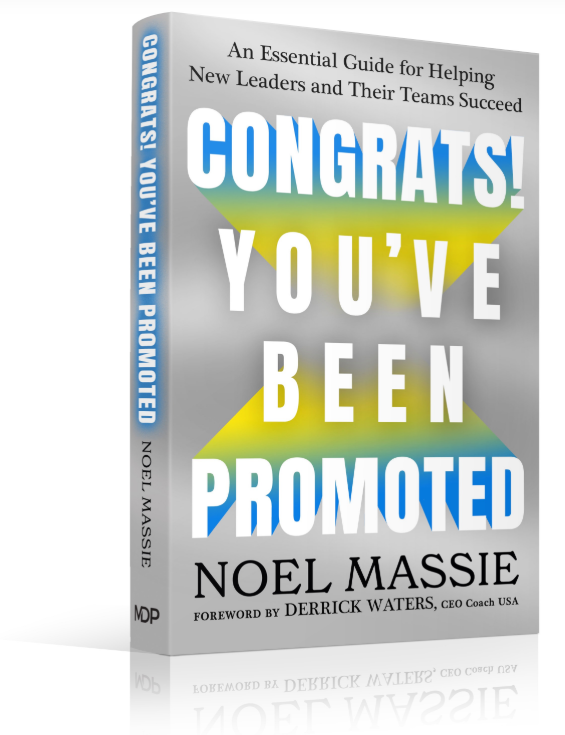
Noel Massie knows what it’s like to lead without a manual—because he lived it. Starting as a part-time truck loader, he rose to become Vice President of U.S. Delivery Operations at UPS, where he led 140,000 employees and mentored over 12,000 frontline supervisors. He saw firsthand how untrained managers derail culture and built a career solving that problem. Today, he teaches values-based leadership through his book Congrats, You’ve Been Promoted and companion masterclass. His specialties include operations, workplace culture, and team development.
noel@noelmassie.com